Mastering Polymorphism and Inheritance in Java
Write Less. Do More. Customize Everything.
By now, you've created classes, objects, and methods. But in real-world software, code doesn’t exist in isolation — it evolves, extends, and adapts. That’s where inheritance and polymorphism come in. These are two pillars of object-oriented programming that help you:
- x>Reuse code effectively
- x>Reduce duplication
- x>Design systems that are flexible and powerful
Inheritance: Learning From the Past
Let’s say you’re modeling animals in a zoo:
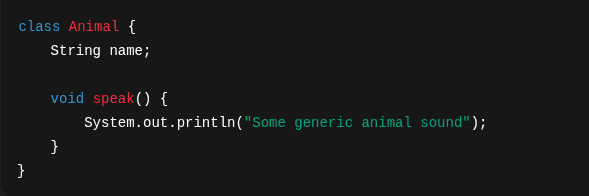
Now, instead of rewriting everything for every animal, you can extend:
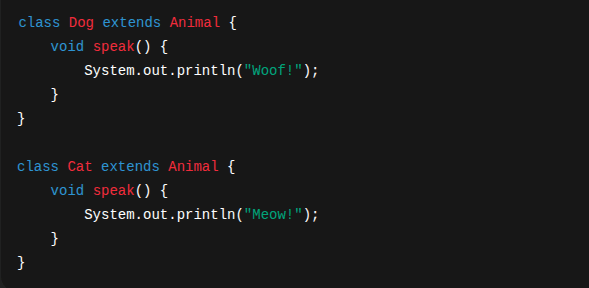
Now both Dog and Cat have the name field and can override speak(). Think of extends as a way of saying: “I am everything my parent is — plus my own stuff.”
Polymorphism: Many Forms, One Interface
Polymorphism means: same method name, different behaviors. You can treat all animals the same, even if they act differently:
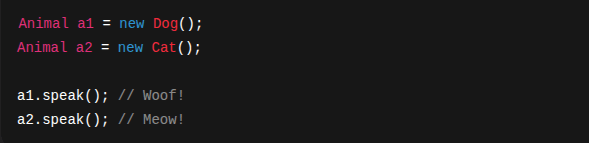
Even though a1 and a2 are declared as Animal, they behave like their true types. Java figures out what method to call at runtime, based on the object’s actual type.
Superclass and Subclass: The Chain of Command
When a subclass doesn’t override a method, it inherits the one from the superclass. You can also call the parent method explicitly:
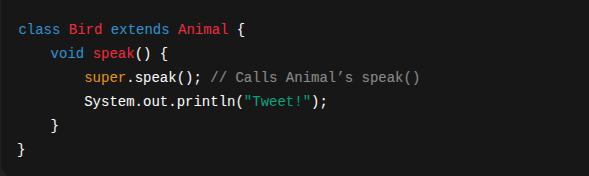
Use super to reference the parent class’s version.
Abstract Classes: Blueprints for Subclasses
An abstract class cannot be instantiated directly. It exists only to be inherited from.

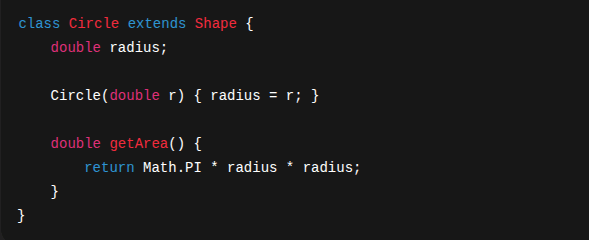
If a class has any abstract methods, it must be abstract too.
Why All This Matters
Inheritance and polymorphism are how you design flexible systems. Example:
- x>A Payment class might be extended into CreditCardPayment, PayPalPayment, etc.
- x>A Shape superclass could allow easy rendering of Circle, Square, etc.
- x>They power frameworks like Spring, where you write behavior once and extend it everywhere.
Alternatives and Utilities
Practice Time
Try this:
1. Create a base class called Vehicle with a method startEngine().2. Create a Car and a Motorcycle that inherit from Vehicle.3. Override startEngine() in each subclass with a different message.4. Create an array of Vehicle, store both in it, and call startEngine() in a loop.You'll see polymorphism in action.
What’s Next
You’ve seen the concepts — now let’s apply them. In the next chapter, we’ll model a real-world domain using classes, inheritance, and all the tools we’ve learned so far. Think library systems, users, items, and logic all in one cohesive design. Ready to architect like a pro? Let’s go.