OOP in Practice: Modeling Real-World Systems
From theory to architecture — time to design like a developer.
You've learned the fundamentals of object-oriented programming (OOP): classes, fields, methods, inheritance, and polymorphism. Now it’s time to put those concepts to work by designing a real-world system. No theory here — this is hands-on application.
The Goal
We'll simulate a basic Library Management System. Your goal is to model:
Users (like readers)Items (like books or DVDs)Borrowing logic (check in / check out)Why this? Because it's:
- x>Familiar (we’ve all used a library)
- x>Rich in concepts (inheritance, relationships, collections)
- x>A great stepping stone to real applications
Identifying Key Classes
Think like a systems analyst. What are the main pieces?
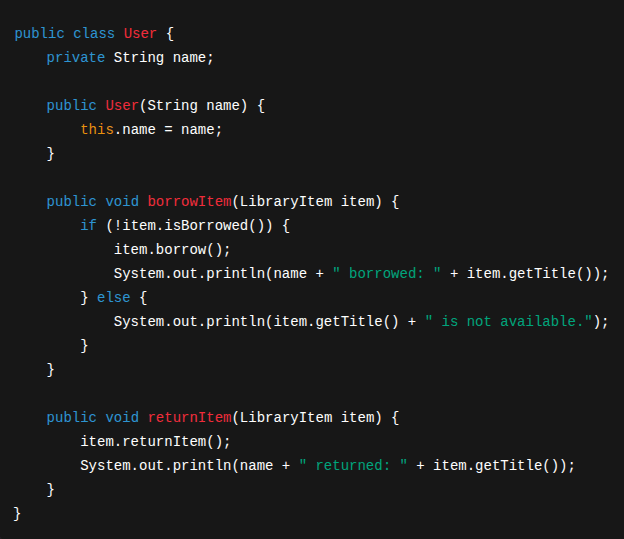
- x>User → Can borrow items
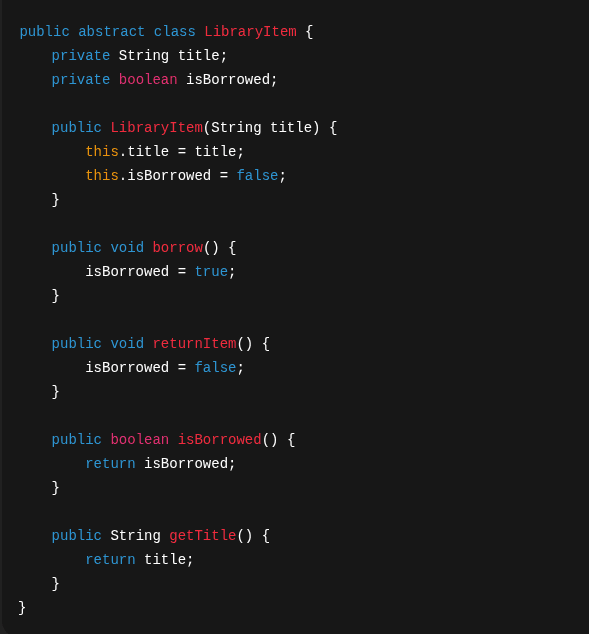
- x>LibraryItem → Base class for anything that can be borrowed
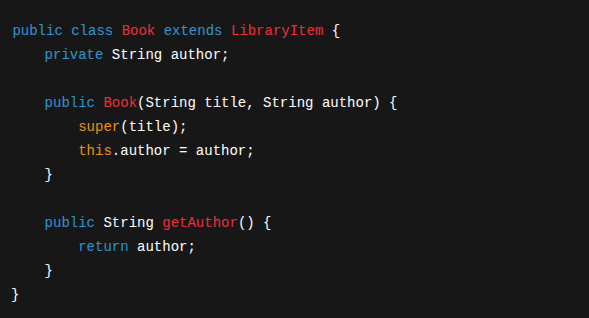
- x>Book, DVD, Magazine could inherit from this
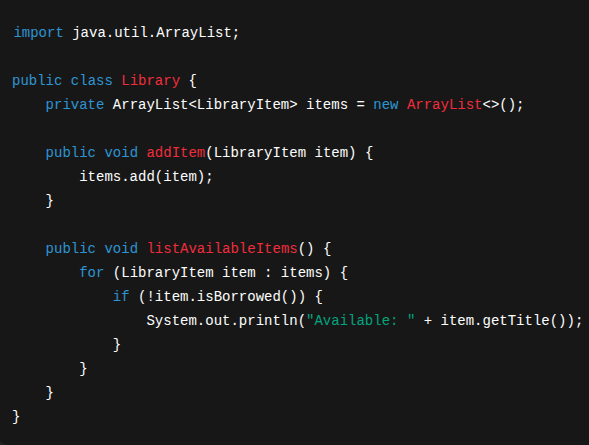
- x>ibrary → Manages a list of items and tracks which are available or borrowed
Building the Model Step-by-Step
The Base Class
A Book Class
A User Class
The Library Class
What You Just Practiced
This simple system shows you:
- x>Class hierarchies with inheritance
- x>Reusable behaviors in an abstract class
- x>Encapsulation via private fields and getters/setters
- x>Composition (Library has a list of LibraryItem)
- x>Real-world OOP design thinking
Optional Challenge
Try adding:
A DVD class that has a duration fieldA method to limit users to 3 borrowed items at a timeTrack due dates (hint: look into java.time.LocalDate)What’s Next
Our code works — but it’s still a little... manual. Let’s learn modern Java tools to process data, write cleaner code, and use functional style features that’ll make you more productive. You’re about to level up.