Design Patterns and SOLID Principles
At this point, you’re writing real Java code. But if your app grows, it can get messy fast. That’s where software design comes in. In this chapter, we’ll teach you how to write clean, scalable, maintainable code using time-tested ideas: SOLID principles and design patterns.
Why Do We Need Design Principles?
Imagine building a house with no blueprint. Sure, it might have walls and a roof, but what happens when you want to add a second floor? The same is true for code. Without structure, your project becomes a spaghetti mess. Design principles give us:
- x>Clear organization
- x>Easier debugging
- x>Simpler testing
- x>Less painful updates
The SOLID Principles
SOLID is an acronym that groups 5 key principles for object-oriented design. Let’s break it down:
S - Single Responsibility Principle (SRP)
“A class should have only one reason to change.” Each class should do one job only.

Don't mix printing, saving, and emailing into one giant class. Keep responsibilities separate.
O - Open/Closed Principle (OCP)
“Software entities should be open for extension, but closed for modification.” You shouldn’t have to change existing code to add new behavior.

Now you can add Triangle without modifying Shape.
L - Liskov Substitution Principle (LSP)
“Subtypes must be substitutable for their base types.” If a class extends another, it should behave like the original.

Don’t break expectations when you inherit.
I - Interface Segregation Principle (ISP)
“Clients should not be forced to depend on interfaces they don’t use.” Split large interfaces into smaller, more specific ones.

Let classes implement only what they need.
D - Dependency Inversion Principle (DIP)
“Depend on abstractions, not concrete implementations.” Instead of this:

Do this:

This way, you can easily swap out different Notifier implementations.
Design Patterns You Should Know
Design patterns are common solutions to common problems. Think of them like reusable recipes in your coding cookbook. Here are a few beginner-friendly ones:
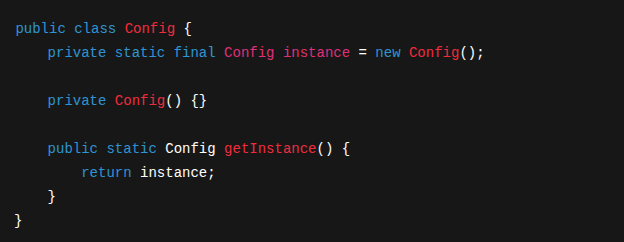
Singleton
Ensure a class has only one instance (like a single config object).
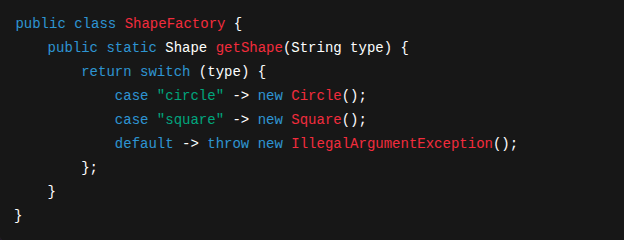
Factory
Encapsulate object creation logic.
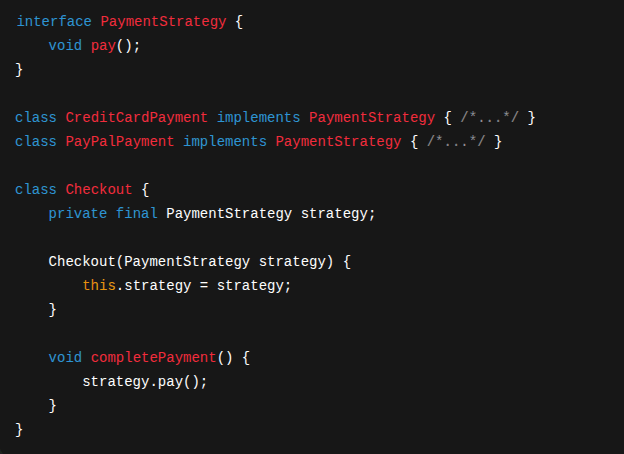
Strategy
Encapsulate interchangeable behaviors.
Applying These in the Real World
When you’re designing a real project:
- x>Use SOLID to guide class structure
- x>Reach for patterns to avoid reinventing the wheel
- x>Don't over-engineer! Patterns are tools, not requirements.
Summary
- x>SOLID makes your classes more robust, reusable, and testable.
- x>Design patterns help you reuse time-tested solutions.
- x>Think like an architect, not just a coder.
What’s Next
As your code grows and evolves, you need a time machine — something to track changes, collaborate, and revert mistakes. Next up: Version Control with Git — your best friend in software development.